
Introduction
Across the world, healthcare spending per capita continues to rise. A common assumption is that countries spending more on healthcare automatically deliver better-quality services. However, global evidence suggests that this assumption is misleading. High healthcare expenditure does not necessarily guarantee high healthcare expenditure vs quality care high-quality care.
Instead, healthcare quality is more strongly influenced by system design, patient-centered care, coordination, and patient safety practices rather than just the amount of money spent.
Does Higher Healthcare Spending Lead to Better Quality?
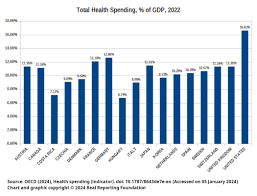
One of the most striking examples is the United States, which has the highest healthcare expenditure per capita globally. Despite this, international comparisons consistently rank the U.S. lower in overall healthcare performance.
Key issues include:
- Poor care coordination
- High administrative complexity
- Inequities in access
- Lower patient satisfaction
This clearly shows that higher spending alone does not ensure better healthcare outcomes or quality.
Countries Delivering High-Quality Care with Lower Expenditure
1. Australia: The Best Overall Model
Australia stands out as the strongest example of delivering high-quality healthcare at relatively lower cost.
Key strengths for high healthcare expenditure vs quality care:
- Ranked #1 overall in international healthcare comparisons
- Around 93% of chronic patients report high-quality, patient-centered care
- Strong doctor-patient communication
- Effective care coordination
- Balanced public-private system
Australia demonstrates that efficient system design can outperform high spending.
2. Netherlands: Strong Access and Affordability
The Netherlands is another high-performing country, especially in terms of accessibility and financial protection.
Key features:
- Universal healthcare coverage
- Low out-of-pocket costs
- High patient satisfaction
- Efficient insurance-based model
It proves that accessibility and affordability are key drivers of quality care.
3. Spain: Efficient but Resource-Constrained
Spain offers an example of efficient healthcare delivery with limited resources.
Strengths:
- High patient-reported satisfaction
- Strong care coordination
- Good patient-centered communication
Challenges:
- Limited consultation time
- Slightly weaker clinical outcomes in some areas
Spain shows that good management can deliver strong patient experience even with lower spending.
Patient-Centered Care: A Key Quality Indicator
Modern healthcare systems are increasingly evaluated based on patient-centered care.
Important components include:
- Clear communication between doctors and patients
- Enough consultation time
- Shared decision-making
- Care plans tailored to patient needs
- Digital health access
However, global data shows that only about 25% of patients have structured care plans, indicating significant room for improvement.
Countries like Australia and Spain perform particularly well in this area.
Patient Safety: A Critical Dimension
Patient safety remains a global concern. Studies show that a significant portion of healthcare spending is used to address preventable harm during treatment.
Norway: Leader in Patient Safety
Norway is widely recognized as a top performer in patient safety, high healthcare expenditure vs quality care.
Key strengths:
- Strong safety protocols
- Effective monitoring systems
- High-quality clinical governance
However, Norway is also a high-spending country, indicating that safety improvements may require targeted investment.
Why High-Spending Systems Often Underperform
High-expenditure countries may still struggle due to:
- Fragmented healthcare systems
- Inefficient resource allocation
- Focus on treatment over prevention
- High administrative costs
- Inequality in access
In contrast, high-performing systems focus on for high healthcare expenditure vs quality care:
- Strong primary healthcare
- Universal coverage
- Preventive care
- Integrated services
- Patient-centered approaches
Conclusion
The global evidence is clear:
High healthcare expenditure does not automatically translate into high-quality care.
Countries that prioritize efficiency, patient-centered care, and system coordination consistently outperform those that rely solely on higher spending.
Final Takeaways:
- Best overall model (quality + lower cost): Australia
- Best for patient safety: Norway
- Efficient lower-cost European example: Spain
- Strong access and affordability model: Netherlands