
Where Is the Compassion Behind Accreditation?
Accreditation vs Reality: The Crisis of Patient-Centered Emergency Healthcare in Bangladesh
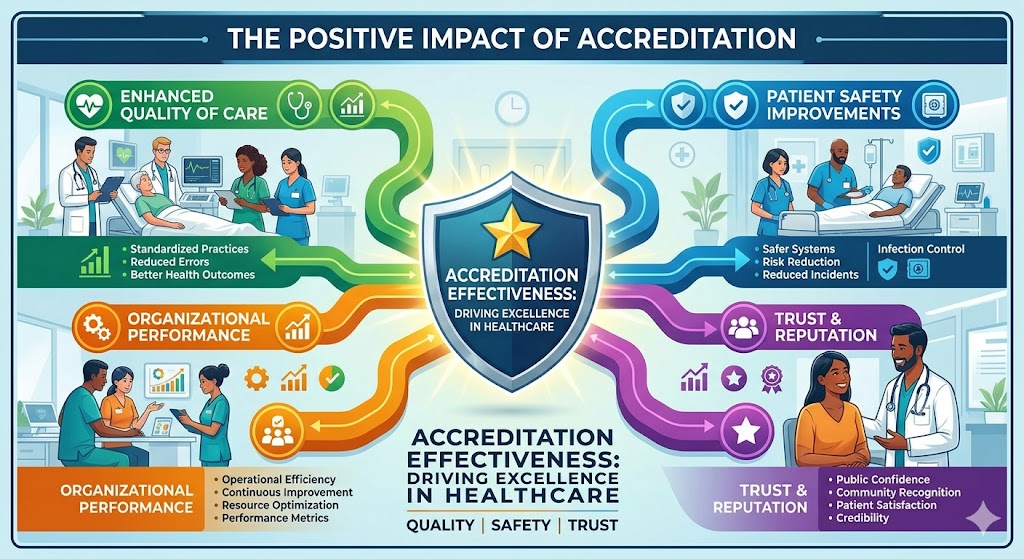
As private investment in Bangladesh’s healthcare sector continues to grow, many hospitals are earning national and international accreditation. On paper, these institutions promise quality care, safety, and standardized clinical services. But in reality, the picture is often very different.
Several recent case experiences involving critically ill patients reveal a troubling gap between hospital accreditation and the actual delivery of emergency medical care. In many cases, patients in life-threatening conditions were denied the speed, coordination, and compassion that define true patient-centered healthcare.
The Core Problem
1. Absence of a Golden Hour response culture
In emergency medicine, every minute matters. Yet in hospitals patient safety matters; administrative formalities such as registration, file creation, and payment processing are prioritized before urgent clinical intervention. This delay can cost lives.
2. Weak frontline emergency response
Security staff, trolley staff, nurses, and junior doctors often lack the training, sensitivity, and accountability required to manage emergency situations effectively. Patients and families frequently experience neglect, disrespect, and a lack of empathy at the most vulnerable moments.
3. Poor clinical governance and monitoring
Continuous monitoring of critically ill patients, rapid clinical decision-making, and timely senior supervision are often missing or ineffective. Without proper oversight, patient safety is severely compromised.
4. Serious communication gaps
Families are often not adequately informed about the patient’s condition, treatment plan, or prognosis. The absence of proper counseling and transparent communication undermines trust and may even worsen outcomes.
5. Accreditation treated as a one-time certificate
In too many cases, accreditation functions as a symbolic achievement rather than a living quality system. There is often little evidence of regular re-audits, real-time quality checks, or patient outcome-based assessments. As a result, accreditation fails to guarantee real service quality.
Key Challenges in Bangladesh’s Emergency Healthcare System
- Tick-box compliance instead of real quality care
- Commercial pressure eroding professional ethics
- Lack of an effective accountability framework
- Failure to implement patient-centered care in practice
- SOPs for emergency care exist, but are poorly enforced
Policy Directions for Reform
1. Make accreditation dynamic, not symbolic
Accreditation should be treated as a continuous process, not a one-time accomplishment. This requires:
- Regular surprise audits
- Patient outcome-based evaluation
- Linking license renewal to performance indicators
2. Strengthen monitoring and supervision
The government, especially DGHS and MOHFW, should establish an independent monitoring cell to regularly assess:
- Emergency response time
- Mortality review
- Adverse event tracking
3. Establish a strong accountability framework
- Define clear responsibility for clinical negligence and system failure
- Make patient grievance redress mechanisms effective
- Activate hospital-level Quality Committees
4. Enforce emergency care protocols
- Implement a “No delay, treat first” policy
- Strengthen triage systems, trolley support, and emergency logistics
- Make Golden Hour management a mandatory SOP
5. Ensure patient-centered care
- Make family communication and counseling mandatory
- Allow one designated family representative limited observation access in critical cases under controlled policy
- Require empathy and communication skills training for healthcare staff
6. Invest in human resource development
- Regular training on emergency response, ethics, and communication
- Introduce performance-based incentives and disciplinary measures
7. Promote data-driven quality improvement
- Build hospital dashboards tracking response time, mortality, and ICU transfer delays
- Make Root Cause Analysis (RCA) mandatory for every adverse event
Conclusion
Accreditation is not just a certificate. It is a promise.
But when that promise is not reflected in real patient care, it becomes dangerous for patients and damaging to public trust in the entire healthcare system.
What Bangladesh urgently needs now is a shift from “Accreditation to Assurance” — a system where every certification is backed by visible, measurable, accountable, and compassionate care.
Unless humanity, professional ethics, and accountability are restored at the heart of healthcare, infrastructure and accreditation alone will never deliver the standard of care patients deserve.