
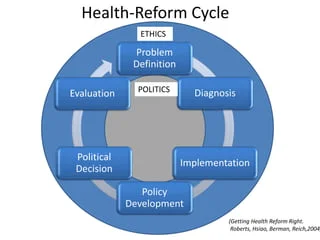
Bangladesh stands at a crucial crossroads in its journey toward Universal Health Coverage (UHC). Despite decades of political commitment and repeated acknowledgment of systemic weaknesses, comprehensive Health system reform in Bangladesh has remained elusive. Successive governments have recognized the importance of reform, yet implementation has consistently fallen short.
Even during transitional periods—such as interim administrations with minimal political risk—the opportunity to enact bold structural changes was not fully utilized. A Health Reform Commission was formed, and it produced thoughtful, evidence-based recommendations. However, these recommendations remain largely unimplemented, highlighting a persistent gap between policy formulation and execution.
Now, with a new political government in place, public confidence is wavering. Many stakeholders fear that without decisive action, Bangladesh may once again miss a critical opportunity to transform its health system.
Why Health System Reform in Bangladesh Is Urgent
Without comprehensive reform, how to achieve universal health coverage in Bangladesh, Bangladesh cannot achieve its healthcare goals. More importantly, the country will continue to struggle with:
- Limited access to quality healthcare
- High out-of-pocket healthcare costs
- Inequality in service delivery
- Weak system resilience
Therefore, achieving Universal Health Coverage in Bangladesh depends entirely on structural transformation.
What Is Holding Back Reform?
The problem is not a lack of knowledge. On the contrary, Bangladesh has:
- Strong technical expertise
- Clear policy recommendations
- Active development partners
However, several barriers continue to block progress.
First, weak implementation systems slow down execution.
Second, political leaders often prioritize short-term gains over long-term reform.
In addition, accountability mechanisms remain limited.
As a result, even well-designed policies fail during execution.
A New Narrative: From Commitment to Action
Bangladesh must now shift its focus. Instead of repeating commitments, the country must prioritize execution.
1. Move from Policy to Implementation
First and foremost, the government should create a time-bound health reform roadmap. This roadmap must include clear targets and measurable outcomes.
2. Strengthen Accountability
At the same time, independent monitoring systems must track progress. This way, institutions will remain accountable for results.
3. Ensure Political Continuity
Furthermore, leaders must treat health reform as a national priority. In other words, reforms should continue beyond election cycles.
4. Reform Health Financing
Equally important, Bangladesh must reduce out-of-pocket costs. To achieve this, policymakers should introduce:
- National health insurance
- Risk pooling systems
- Increased public health spending
5. Improve Service Delivery
Meanwhile, the system must become more decentralized and integrated. For instance, strengthening primary healthcare can significantly improve access.
6. Engage Citizens
Finally, public engagement is essential. When citizens demand accountability, reform becomes more likely.
How Can Bangladesh Achieve the Transition?
Bangladesh can still achieve meaningful transformation. However, this requires urgency and discipline.
To begin with, the government can launch pilot reforms in selected regions.
Then, it can scale successful models nationwide.
In addition, digital health systems can improve transparency and efficiency.
At the same time, investment in healthcare workers—especially in rural areas—must increase.
Most importantly, leaders must shift from partial implementation to full execution.
Conclusion: This Time Must Be Different
Bangladesh has faced this challenge before. Each time, leaders showed commitment. Yet, they failed to complete the reform process.
Now, the country has another opportunity.
If policymakers act decisively, Bangladesh can build a high-quality and equitable healthcare system.
Otherwise, the goal of Universal Health Coverage in Bangladesh will remain out of reach.